Train for High School Golf. Develop for What Comes Next.
Making the high-school golf team is only the beginning. Players need a structured development plan that helps them improve their scoring, consistency, practice habits, competitive skills, and ability to perform under pressure.
Players Elite Golf Academy provides high-school golfers with purposeful training designed around the individual player — not random lessons.
High School Golf Requires a Complete Game
High-school golf performance involves more than simply having a technically sound swing. These are the areas that decide whether a player scores — and keeps scoring — when it matters.
Ball Striking & Consistency
Develop predictable contact, start direction, curvature, dispersion, and reliable shot patterns.
Putting & Speed Control
Improve start line, green reading, lag putting, speed control, and reducing unnecessary 3-putts.
Wedge & Short-Game Performance
Develop calibrated wedge distances, trajectory control, chipping, pitching, recovery shots, and scoring skills.
Speed & Athletic Development
Improve golf-specific movement, mobility, club speed, power, and athletic development.
Course Management & Scoring Strategy
Learn better shot selection, risk management, target selection, and how to play to individual strengths.
Practice Habits & Routines
Replace random ball hitting with structured, purposeful practice and measurable goals.
Mental & Competitive Development
Build focus, emotional control, confidence, routines, commitment, and the ability to respond after mistakes.
Tournament Preparation
Prepare the player's complete game for important matches, qualifiers, tournaments, and championship competition.
Don't Wait Until Tryout Week to Prepare
Preparation for high-school golf should begin well before tryouts. The players who arrive confident are the ones who built their game over time — not the week before.
Tryouts reveal your game. Training builds it.
Training develops the skills, habits, and confidence that show up when tryouts begin — but it does not guarantee a player will make a school team. What it does guarantee is a genuine, measurable improvement process.
In-Season Training
Once the competitive season begins, training should become more performance-focused. The goal shifts from building new skills to sharpening the game the player already has.
Your season is where you compete.
Your training is where you continue to develop.
The Season Shows You What to Build Next
The offseason is the opportunity to use results from the competitive season to create a structured development plan.
Spring is when you see the results. Winter is when you build them.
The Players Elite High School Development Process
A clear, repeatable progression — from evaluation to progress review — that turns training into measurable improvement.
Player Evaluation
Establish current skills, scoring ability, practice habits, competitive experience, strengths, and development needs.
Individual Development Plan
Identify the areas that can make the biggest difference in performance.
Structured Training
Use individual coaching, purposeful practice, technology, and measurable drills.
Competitive Application
Apply development to matches, tournaments, qualifiers, and on-course situations.
Progress Review
Measure improvement and adjust the training plan as the player develops.
Measure What Matters
Players Elite uses performance information to make coaching decisions rather than simply guessing. Every measurement connects to a specific development choice.
The examples below are the kinds of information that guide training — not a checklist of numbers, but a picture of where the player is improving and where the next opportunity lives.
MEASURE. TRAIN. IMPROVE.
Technology & Training Environment
High-school development happens inside a purpose-built performance environment — technology, coaching, and structured practice working together to produce measurable results.
Technology is used to support coaching decisions and measure improvement — not simply to collect data. Every measurement connects to a choice the player can make on the course.
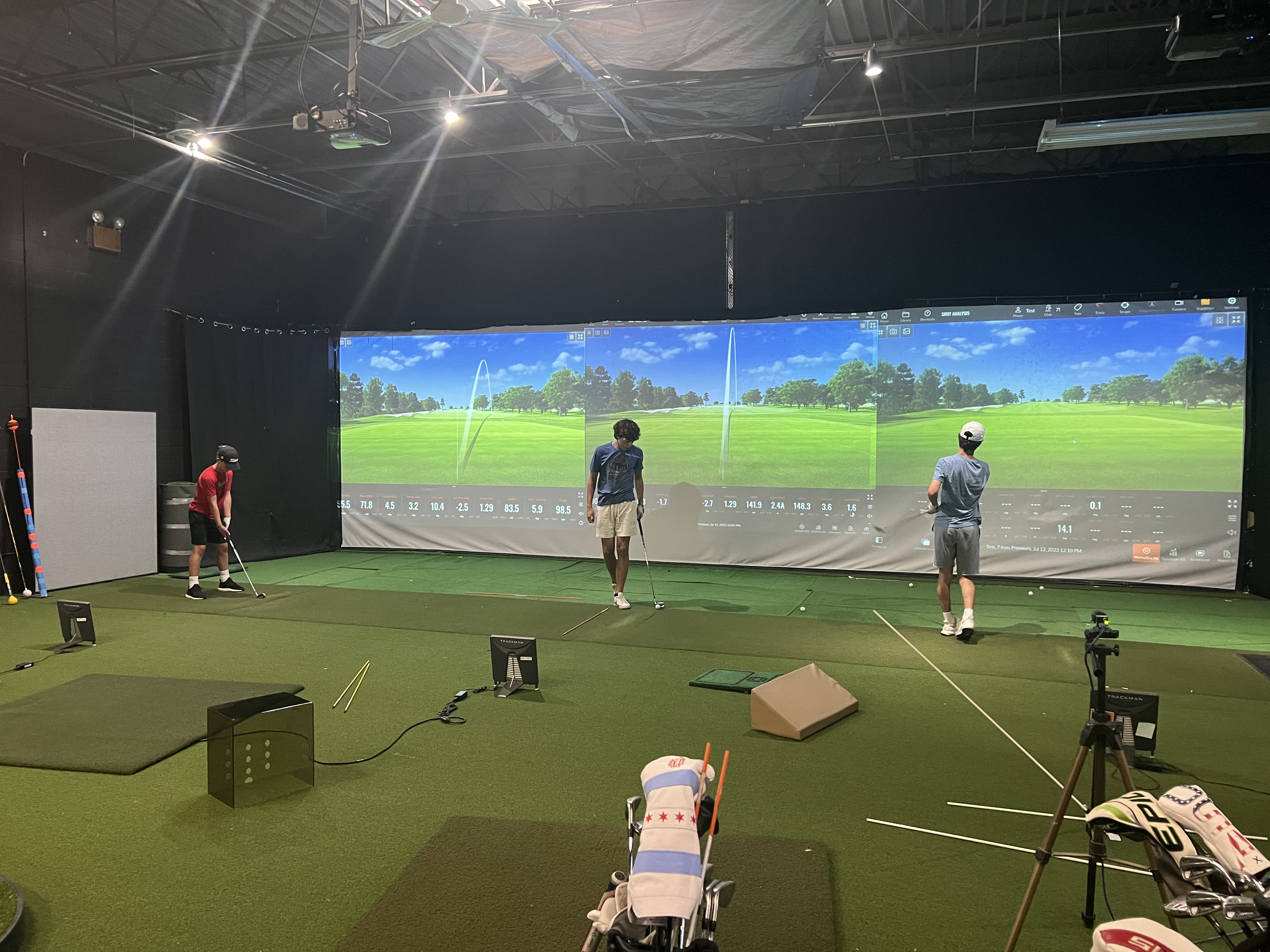
Built for High-School Golfers
High-school training is designed for players who want a real development plan — not occasional lessons.
One Player. One Development Plan. One Coaching Voice.
Long-term development requires consistency, purposeful practice, accountability, and measurable progress. The appropriate training structure is recommended after the Player Evaluation and is based on the golfer's current level, goals, and development needs.
Specific program details and pricing are shared during the evaluation process so the recommendation fits the player — not the other way around.

Michael Camastro, PGA
Michael has coached golfers through junior development, high-school competition, competitive junior golf, and college pathways. His approach combines coaching experience, performance measurement, and long-term player development — so high-school golfers don't just play the season, they keep building toward what comes next.
Frequently Asked Questions
When should a golfer begin preparing for high-school tryouts?
Well before tryout week. Preparation should start with a Player Evaluation to establish a scoring baseline, then focus on ball-striking consistency, short game, speed, and routines so the player arrives confident rather than rushing to get ready.
Can you help a player who did not make their high-school team?
Yes. A Player Evaluation identifies the areas that held the player back and builds a development plan around them. Many golfers improve significantly with structured training and return stronger the following season.
Do high-school golfers need tournament experience?
It helps, but it isn't required to begin. Tournament experience is built over time. We help players add competitive rounds and junior-tour events as their development and confidence grow.
Should players continue training during their school season?
Yes, but training becomes more performance-focused. In-season work centers on putting, speed control, wedge proximity, ball-flight consistency, course management, and routines — sharpening the game rather than rebuilding it.
What should a golfer work on during the offseason?
The offseason is for building. Full-swing development, club speed and ball speed, wedge distance control, putting technique, short game, golf fitness, and TrackMan and video analysis — the work that shows up the following spring.
Is high-school training only about the golf swing?
No. High-school golf requires a complete game — ball striking, putting, wedges, speed, course management, practice habits, and mental preparation. The swing is one part of a larger development plan.
Do you use TrackMan and putting technology?
Yes. TrackMan measures ball flight, club delivery, and speed. SAM PuttLab and WellPutt measure putting performance. Technology supports coaching decisions and tracks improvement — it doesn't replace coaching.
How do we know which training program is appropriate?
The process begins with a Player Evaluation. After the evaluation, Michael recommends the training structure that fits the player's current level, goals, and development needs.
Build the Player You Want to Become
Whether the goal is making the high-school team, improving tournament performance, competing for a varsity position, or preparing for the next level, development begins with understanding where the player stands today.